
Dry Ice Cleaning (CO₂ Blasting) Service

At Singson Electrical, we provide advanced Dry Ice Cleaning (CO₂ Blasting) solutions specially designed for HT motors, generators, electrical panels, and critical rotating equipment in heavy industries.

Dry Ice Cleaning is a modern, non-abrasive cleaning process that uses solid CO₂ pellets accelerated through compressed air. The pellets impact the surface, instantly sublimate (convert from solid to gas), and lift contaminants without damaging the base material.

How Dry Ice Cleaning Works.
DryIce1
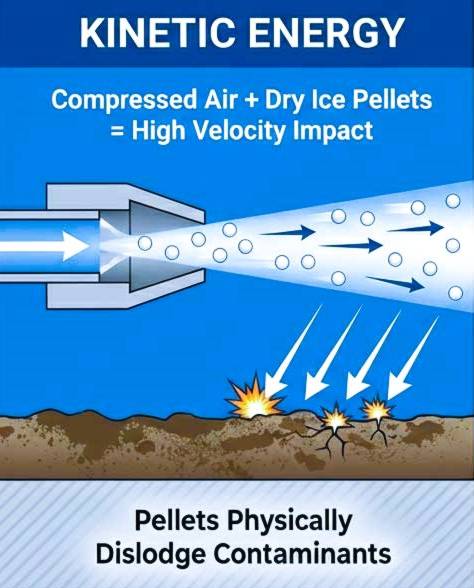
Kinetic Impact

High-velocity dry ice pellets strike the surface and loosen dirt, grease, carbon deposits, and contaminants.
DryIce2
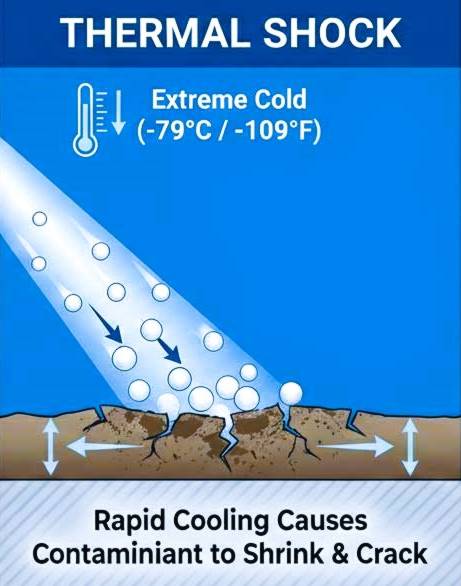
Thermal Shock

The extreme cold temperature (-78.5°C) causes contaminants to shrink and detach from the substrate.
DryIce3
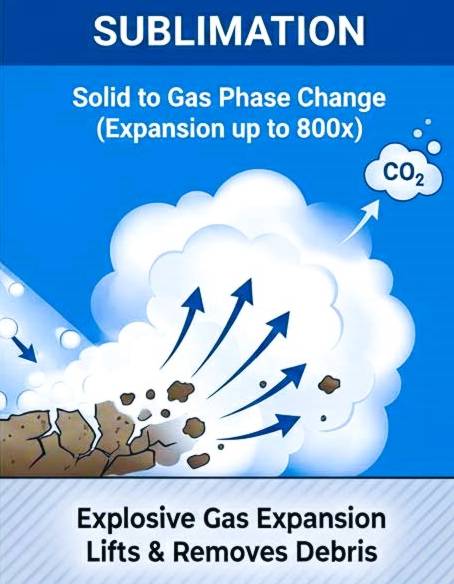
Sublimation Expansion

Upon impact, dry ice converts into gas and expands rapidly, lifting contaminants away from the surface without leaving secondary waste.

Applications in Electrical Equipment
Our CO₂ blasting service is ideal for:
HT & LT Motor Stator and Rotor Cleaning
Generator Windings
Slip Rings & Commutators
Electrical Panels & Bus Bars
Transformer External Cleaning
Carbon, Oil, and Grease Removal
Cement & Dust Contamination Removal
Pre-Inspection Cleaning Before Overhauling
It is particularly effective during planned shutdowns and preventive maintenance schedules.
Key Advantages
Non-Abrasive & Non-Conductive
No damage to insulation, varnish, or delicate windings.
No Moisture Introduction
Unlike water cleaning, it adds no moisture and preserves insulation resistance.
No Secondary Waste
Dry ice sublimates into gas, leaving only the removed contaminants for disposal.
Minimal Downtime
Equipment can often be cleaned in place without complete dismantling.
Environmentally Responsible
The CO₂ used is reclaimed, non-toxic, and non-flammable.
Safe for Sensitive Components
Maintains dielectric integrity of insulation systems.
Operational Benefits
It is particularly effective during planned shutdowns and preventive maintenance schedules.
Improves insulation resistance (IR values)
Reduces risk of flashover and tracking
Enhances cooling efficiency of motors
Removes conductive contamination
Extends equipment life
Supports predictive maintenance programs